
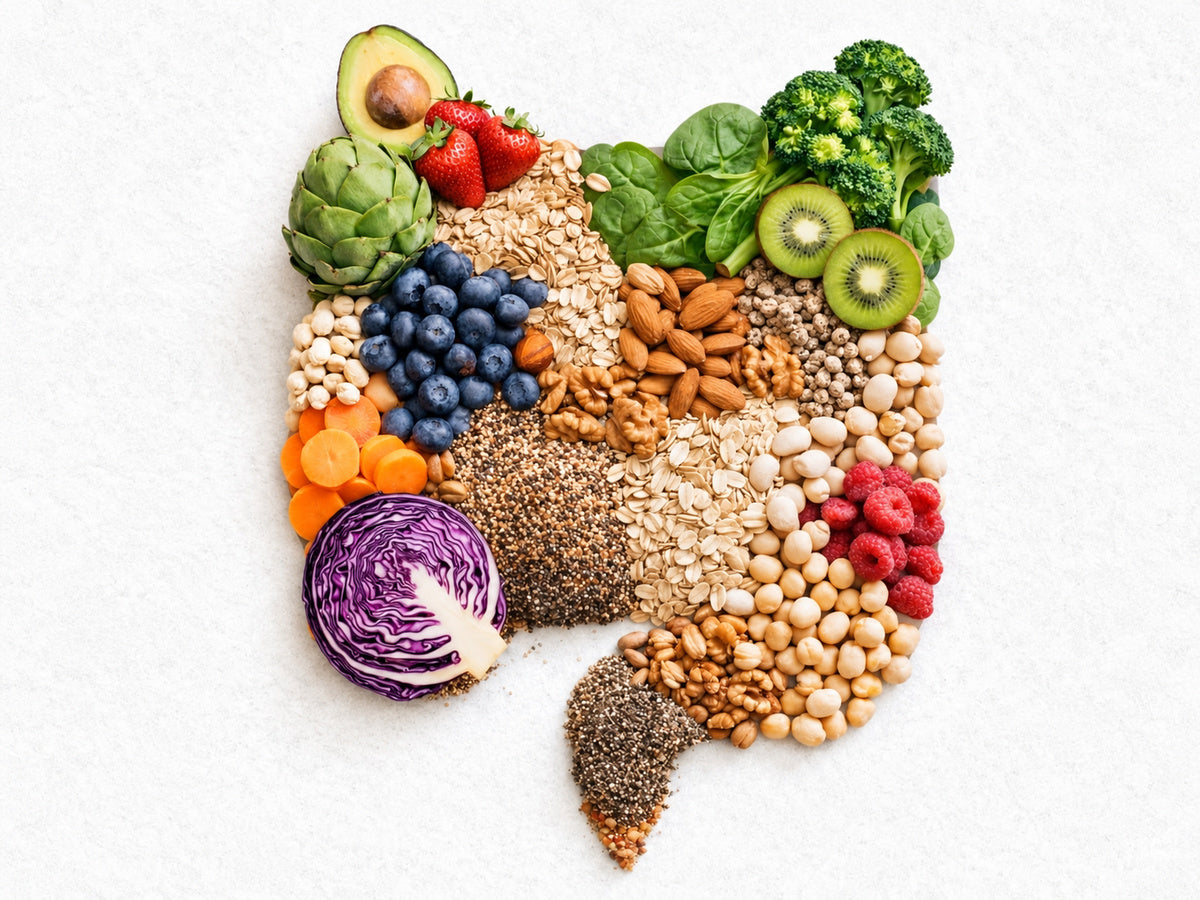

When people search for Indian foods for gut health, they often find expensive berries, imported powders and complicated meal plans.
But your everyday kitchen may already contain many foods that can support a healthy digestive routine.
Dal, sabzi, whole grains, seasonal fruit, nuts and seeds may sound ordinary—but they provide dietary fiber, plant nutrients and variety. The real benefit does not come from eating one “gut superfood.” It comes from including different plant foods regularly and in portions your body can comfortably tolerate.
What Makes a Food Good for Gut Health?
A gut-friendly diet is not built around one magical ingredient. It usually includes:
-
Dietary fiber: Fibre supports bowel function, while certain fibers are used as food by gut bacteria.
-
Plant variety: Different plant foods provide different types of fiber and plant compounds.
-
Enough water: Fiber works better when your body is properly hydrated.
-
Regular portions: A spoonful used only as a garnish may not make a meaningful difference.
-
Consistency: Foods eaten regularly matter more than a “healthy” meal eaten occasionally.
You do not need to eat every gut-friendly food in one day. The aim is to build a pattern you can continue.
The Myth: Gut-Friendly Food Must Be Exotic
A food does not become better for your gut simply because it is expensive or trending.
A bowl of dal can provide fibre and plant protein. A guava gives you whole-fruit fibre. A vegetable sabzi adds fibre, water and plant variety. Groundnuts and sesame seeds can make an everyday meal more nourishing without carrying an imported label.
How the food is prepared also matters.
Whole fruit retains its natural fibre structure better than fruit juice. A proper portion of vegetables contributes more than a few pieces added for decoration. Similarly, suddenly eating large portions of several high-fibre foods may cause gas or bloating if your body is not used to them.
The goal is not to create a perfect “gut diet.” It is to make familiar Indian food work harder through better variety, portions and consistency.
7 Indian Foods for Gut Health
Dal and other pulses
Moong, masoor, arhar, chana, rajma and lobia provide dietary fibre along with plant protein.
Instead of treating dal as a thin accompaniment, allow it to take meaningful space in your meal. You can also rotate different pulses during the week rather than depending on the same dal every day.
If pulses make you feel gassy:
-
Begin with a smaller portion.
-
Soak them where appropriate.
-
Cook them thoroughly.
-
Notice whether a particular pulse suits you better than another.
There is no need to avoid every pulse because one variety causes discomfort.
Seasonal vegetable sabzi
Vegetables are one of the easiest ways to add fibre and plant variety to lunch and dinner.
Rotate familiar vegetables such as:
-
Lauki and tori
-
Bhindi
-
Carrots
-
Beans
-
Cauliflower
-
Pumpkin
-
Spinach and other leafy greens
Try to give vegetables visible space on your plate. A little coriander used as a garnish adds flavour, but it is not the same as eating a proper vegetable portion.
Different colours and types of vegetables also make the diet less repetitive.
Whole seasonal fruit
Guava, pear, apple, orange, papaya and banana are practical options that are widely available in India.
Whenever possible, eat fruit whole instead of relying on juice. Juicing removes or breaks down much of the natural fibre structure and makes it easier to consume several fruits quickly without feeling equally full.
Choose fruits that are:
-
Available in the current season
-
Affordable for your household
-
Comfortable for your digestion
-
Easy to include consistently
You do not need imported berries to include fruit in a gut-friendly diet.
Whole grains and millets
Whole wheat, barley, bajra, jowar, ragi and less-refined rice can add more grain variety to your meals.
You do not need to replace every familiar staple immediately. Instead, rotate grains in forms your family can realistically continue—for example:
-
Bajra or jowar roti
-
Ragi dosa
-
Barley khichdi
-
Whole-wheat roti
-
Less-refined rice with dal and sabzi
Changing everything suddenly often makes a diet difficult to maintain. Gradual variety is more practical.
Oats or vegetable dalia
Oats and broken wheat, commonly called dalia, can make breakfast more fibre-rich than many refined options.
Their value depends on how they are prepared. Plain oats or dalia combined with vegetables, fruit, nuts or seeds are different from heavily sweetened instant mixes.
Easy combinations include:
-
Vegetable dalia with peas and carrots
-
Oats with fruit and seeds
-
Savoury oats with vegetables
-
Dalia upma with peanuts
Choose the version you can eat regularly—not the one that looks healthiest online but feels unrealistic in your routine.
Nuts and seeds
Groundnuts, almonds, sesame, flax and chia seeds can add fibre, healthy fats and texture in modest portions.
You can use them in:
-
Chutney
-
Porridge
-
Dahi
-
Homemade snacks
-
Salads or vegetable dishes
Nuts and seeds can support a varied diet, but they should not replace vegetables, fruits, pulses or whole grains.
A small, consistent portion is more useful than occasionally adding a large amount.
Plain dahi and familiar fermented foods
Plain dahi can be part of a balanced Indian meal and may contain live microorganisms.
However, homemade dahi should not automatically be called “probiotic.” The microorganisms can vary depending on the starter culture, fermentation process and storage conditions. A fermented food is not automatically a clinically proven probiotic food.
Choose plain dahi instead of heavily sweetened flavoured versions. If dairy does not suit you, there is no need to force it—your gut-friendly diet can still include fibre-rich plant foods.
An Easy Way to Include These Foods in One Day
You do not need a complicated meal plan. A normal day could look like:
-
Breakfast: Vegetable dalia with a small portion of nuts or seeds
-
Lunch: Dal, seasonal sabzi, roti and plain dahi
-
Snack: One whole seasonal fruit or roasted chana
-
Dinner: Vegetable khichdi, millet roti or another familiar home-cooked combination
This is only an example—not a compulsory plan. Your needs depend on your health, appetite, activity level and food tolerance.
Key takeaway
A gut-friendly Indian diet can begin with ordinary food already present in your kitchen.
Rotate pulses, vegetables, whole grains, fruit, nuts and seeds. Eat meaningful portions, drink enough water and increase fibre gradually. Variety and consistency matter more than chasing one “perfect” food.
What If Fibre-Rich Foods Make You Feel Bloated?
More fibre is not always better when added suddenly.
If your current diet contains little fibre, a large increase may temporarily cause gas, fullness or bloating. Introduce changes gradually instead of adding dal, seeds, millets and large vegetable portions all at once.
Also remember to drink enough water.
If bloating is severe, keeps returning or appears with pain, vomiting, weight loss, blood in the stool or a significant change in bowel habits, seek medical advice.
FAQ
Which Indian food is best for gut health?
There is no single best food for gut health. A varied pattern of pulses, vegetables, whole grains, whole fruit, nuts and seeds is more useful than depending on one ingredient.
Choose foods and portions that suit your health needs and digestion.
Is homemade dahi automatically probiotic?
No. Homemade dahi is a fermented food and may contain live microorganisms, but the strains and amounts can vary with the starter, fermentation and storage.
A food should not automatically be called probiotic unless it contains identified strains with evidence of a specific health benefit.
What should I do if dal or vegetables make me bloated?
Reduce the portion and increase it gradually. For pulses, soaking and thorough cooking may help. Also notice whether one particular food or preparation causes more discomfort than others.
Persistent or severe bloating should be discussed with a doctor or registered dietitian.
Can these foods cure constipation?
Fibre-rich foods may support bowel function as part of a suitable diet, especially when combined with enough fluids and movement. However, they are not guaranteed treatments.
Ongoing constipation, bleeding, severe pain, vomiting, unexplained weight loss or a major change in bowel habits requires medical assessment.
References
-
World Health Organization. Healthy Diet.
https://www.who.int/news-room/fact-sheets/detail/healthy-diet -
ICMR–National Institute of Nutrition. Dietary Guidelines for Indians, 2024.
https://www.nin.res.in/dietaryguidelines/ -
ICMR–National Institute of Nutrition. Indian Food Composition Tables, 2017.
https://www.nin.res.in/ebooks/IFCT2017.pdf -
Marco ML, et al. The International Scientific Association for Probiotics and Prebiotics Consensus Statement on Fermented Foods. Nature Reviews Gastroenterology & Hepatology. 2021;18:196–208.
https://pubmed.ncbi.nlm.nih.gov/33398112/ -
Ross FC, et al. The Interplay Between Diet and the Gut Microbiome: Implications for Health and Disease. Nature Reviews Microbiology. 2024.
https://pubmed.ncbi.nlm.nih.gov/39009882/
General education only—not medical advice.
Leave a comment
This site is protected by hCaptcha and the hCaptcha Privacy Policy and Terms of Service apply.