
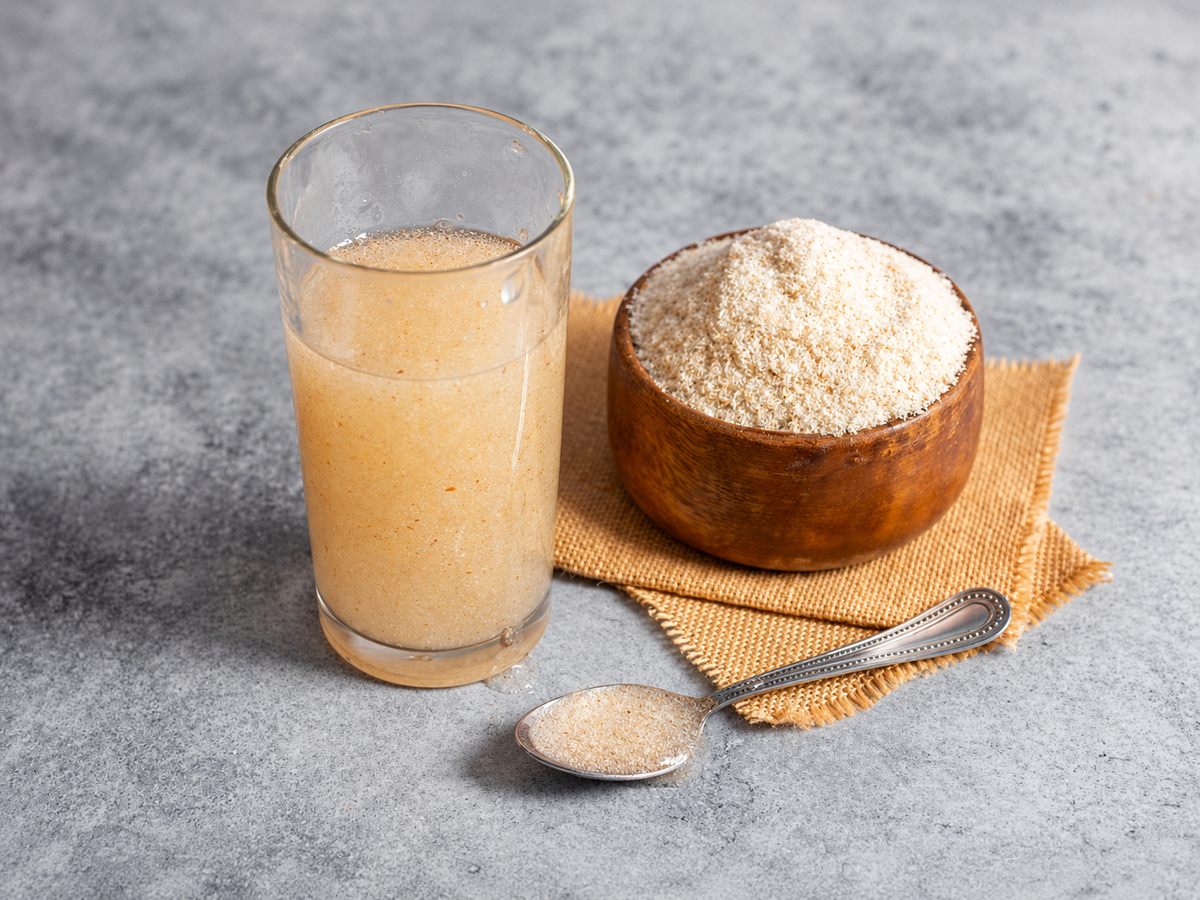
Psyllium husk is commonly associated with digestion and easier bowel movements.
But research has also explored another question: Can psyllium help lower cholesterol?
Studies suggest that taking a sufficient amount of psyllium regularly may help produce a modest reduction in LDL cholesterol for some people. However, the result depends on the dose, consistency, overall diet and individual health.
Simply seeing psyllium on an ingredient list does not mean that every product containing it will deliver the same results seen in clinical studies.
What Is Cholesterol?
Cholesterol is a waxy, fat-like substance that your body needs in the right amount. Your body uses it to build cells and produce certain hormones, vitamin D and bile acids.
Cholesterol travels through the blood inside particles called lipoproteins.
You may have heard about:
-
LDL cholesterol: Often called “bad” cholesterol because high levels may contribute to plaque buildup in the arteries.
-
HDL cholesterol: Often called “good” cholesterol because it helps transport cholesterol back to the liver.
Cholesterol itself is not the enemy. The concern is having unhealthy levels—particularly high LDL cholesterol—over time.
High cholesterol usually has no obvious symptoms. A blood test called a lipid profile is required to measure it.
What Is Psyllium Fiber?
Psyllium, also known as ispaghula, comes from the husk of Plantago ovata seeds.
It is a soluble, gel-forming fiber. When psyllium is mixed with liquid, it absorbs water and forms a soft gel.
This gel-forming quality is one reason psyllium is commonly used to support comfortable bowel movements. Researchers have also studied how it may affect LDL cholesterol.
How May Psyllium Affect Cholesterol?
Your liver uses cholesterol to make bile acids, which help digest fat.
Normally, some bile acids are reabsorbed from the intestine and reused. Gel-forming soluble fibers such as psyllium may reduce the reabsorption of some bile acids and increase their removal through stool.
The liver may then use more cholesterol from the blood to make new bile acids. Over time, this process may contribute to a modest reduction in LDL cholesterol.
This is a simplified explanation. Cholesterol levels are also affected by genetics, diet, physical activity, body weight, medical conditions and medicines.
What Does the Research Say?
A systematic review and meta-analysis examined 28 clinical trials involving 1,924 participants.
Participants consumed a median psyllium dose of approximately 10.2 grams per day for at least three weeks.
The researchers reported an average LDL cholesterol reduction of approximately 0.33 mmol/L, equal to around 13 mg/dL. They also observed changes in non-HDL cholesterol and another cholesterol-related marker called apolipoprotein B.
A more recent analysis of 41 randomized trials also reported modest reductions in total and LDL cholesterol. However, results varied considerably between studies.
What these numbers actually mean
The research does not prove that:
-
Every person will experience the same reduction
-
Every product containing psyllium will produce the same result
-
A small amount of psyllium is equal to the amount used in clinical trials
-
Psyllium can replace cholesterol medication
-
Psyllium alone can prevent heart disease
The amount consumed matters. So do consistency, overall diet and individual health.
Psyllium Is Support—Not Cholesterol Treatment
Psyllium may be one useful part of a heart-conscious diet, but it is not a treatment for high cholesterol on its own.
High LDL cholesterol may require:
-
Changes in overall eating habits
-
Reduced intake of saturated and trans fats
-
Regular physical activity
-
Weight management where appropriate
-
Treatment of related medical conditions
-
Cholesterol-lowering medicines prescribed by a doctor
Do not stop or reduce prescribed cholesterol medicine because you have started consuming psyllium.
Dietary fiber and medication do different jobs, and some people need both.
How to Include Psyllium Safely
If you choose to use psyllium:
-
Follow the serving instructions on the product
-
Mix it with the recommended amount of water
-
Drink it promptly before it becomes too thick
-
Maintain adequate fluid intake throughout the day
-
Begin gradually if your usual diet is low in fiber
-
Do not take more simply because you want faster results
Increasing fiber too quickly may cause gas, bloating or abdominal discomfort.
Psyllium may also affect how some medicines are absorbed. If you take regular medication—particularly for cholesterol, diabetes, thyroid conditions or other long-term health concerns—ask your doctor or pharmacist how to space it from psyllium.
People with difficulty swallowing, severe abdominal pain or a suspected intestinal blockage should seek medical advice before taking a fiber supplement.
Food Sources of Soluble Fiber
Psyllium is not the only source of soluble fiber.
A food-first routine can also include:
-
Oats
-
Barley
-
Dal and other pulses
-
Rajma
-
Chana
-
Apples
-
Pears
-
Oranges
-
Carrots
-
Flaxseeds
These foods provide fiber together with vitamins, minerals and other plant compounds.
No single ingredient can replace the benefits of a varied and balanced diet.
Where Isochia Fits
Isochia contains psyllium husk as part of a multi-fiber blend that also includes PHGG, chia seed powder and amla fiber.
Its role is to complement daily fiber intake and support digestive wellness. It should not be presented as a cholesterol-lowering treatment or used as a replacement for prescribed medication.
The cholesterol studies discussed in this article used measured amounts of psyllium. The presence of psyllium in a product does not automatically mean that the product provides the same quantity used in those studies.
Key Takeaway
Research suggests that regularly consuming an adequate amount of psyllium may modestly reduce LDL cholesterol in some people.
But the effect depends on the quantity, consistency, overall diet and individual health.
Think of psyllium as one possible source of soluble fiber—not as a shortcut, heart medicine or replacement for medical care.
FAQ
Does psyllium lower LDL cholesterol?
Clinical studies suggest that psyllium may help produce a modest reduction in LDL cholesterol when consumed regularly in sufficient amounts. Results vary, and psyllium should not replace treatment recommended by a doctor.
How much psyllium was used in cholesterol studies?
A 2018 meta-analysis reported a median intake of approximately 10.2 grams of psyllium per day. This does not mean that everyone should take that amount. Follow product instructions and consult a healthcare professional for personal guidance.
Can I take psyllium with cholesterol medicine?
Do not stop or reduce cholesterol medicine without speaking to your doctor. Psyllium may affect the absorption of some medicines, so ask your doctor or pharmacist whether the doses need to be separated.
Does Isochia lower cholesterol?
Isochia contains psyllium as part of its multi-fiber blend, but it is designed to support daily fiber intake and digestive wellness. It should not be considered a treatment for high cholesterol or a replacement for medication and medical care.
References
-
PubMed: Effect of Psyllium Fiber on LDL Cholesterol and Other Lipid Markers
-
National Heart, Lung, and Blood Institute: What Is Blood Cholesterol?
-
FSSAI: Food Safety and Standards Advertising and Claims Regulations
General education only — Not medical advice.

Leave a comment
This site is protected by hCaptcha and the hCaptcha Privacy Policy and Terms of Service apply.